目录
接触到ws、mqtt等异步的通信方式转同步,学习CountDownLatch和CompleteFuture在java中的使用和原理
CountDownLatch
定义
CountDownLatch 是 Java 中的一个用于管理并发控制的同步辅助类,作用是允许一个或多个线程等待其他线程完成操作。顾名思义,它的工作机制类似于“倒计时闩锁”,线程会阻塞等待,直到闩锁的计数器减少到 0,然后才能继续执行。
CountDownLatch是java.util.concurrent 包的一部分,用于同步一个或多个线程以等待特定条件的满足。它在创建时初始化一个给定的计数,表示必须发生的事件数量,才能使线程继续执行。这个计数通过调用 countDown() 方法来递减,等待该条件的线程调用 await() 方法来阻塞,直到计数达到零。
关键组件
- 计数:CountDownLatch 的核心概念是计数。它从创建锁存器时指定的初始值开始,只能递减,不能重置。
- await():线程使用此方法等待计数达到零。如果当前计数大于零,这些线程将被置于等待状态。可以设置超时时间,避免阻塞。
- countDown() :调用此方法以递减计数。当计数达到零时,所有等待的线程将被释放。
- 线程安全:CountDownLatch 是线程安全的,它使用内部的 AQS(AbstractQueuedSynchronizer)来管理状态,确保计数的可见性和原子性。
工作原理
CountDownLatch 本质上是一种简化的信号量(Semaphore)。它的核心思想是设定一个计数器,当计数器值为 0 时,其他被阻塞的线程才会开始运行,线程的释放建立在调用 countDown 方法去减少计数器次数的基础上。
- 使多个线程等待一系列事件发生。
- 让一个线程等待完成多个步协作操作的线程。
- 在某个条件达到之前阻塞线程。
使用await()和countdown()函数就能实现简单的异步转同步。核心设计思路:
- 主线程发送 WebSocket 消息后,调用 latch.await() 阻塞,等待响应;
- WebSocket 回调线程收到响应后,调用 latch.countDown() 唤醒主线程;
- 主线程被唤醒后,从线程安全容器(如 ConcurrentHashMap)中获取响应结果。
展开代码// 关键逻辑片段
public String sendSyncWithLatch(String message) throws Exception {
    String requestId = UUID.randomUUID().toString();
    String sendMsg = wrapMessage(requestId, message);

    CountDownLatch latch = new CountDownLatch(1);
    responseCache.put(requestId, null);
    latchCache.put(requestId, latch);

    try {
        webSocket.send(sendMsg);
        // 阻塞主线程,直到 countDown() 或超时
        if (!latch.await(5, TimeUnit.SECONDS)) {
            throw new TimeoutException("超时");
        }
        return responseCache.remove(requestId);
    } finally {
        // 清理缓存
        responseCache.remove(requestId);
        latchCache.remove(requestId);
    }
}


@Override
public void onMessage(WebSocket webSocket, String text) {
    String requestId = parseRequestId(text);
    if (requestId != null && latchCache.containsKey(requestId)) {
        responseCache.put(requestId, text);
        latchCache.remove(requestId).countDown(); // 唤醒主线程
    }
}
其中latchCache存储CountDownLatch对象,responseCache存储返回值,两者都要用线程安全的本地存储实现(ConcurentHashMap)。
应用场景
- 批量任务协调
- 并行计算:计算任务很耗时,但是可以分成多个部分并行处理,然后将结果进行合并。
- 服务启动检查:可以为应用服务做“健康检查”。例如,系统在完全启动之前,需要依赖多个外部服务,那么我们可以通过异步方式检测各个服务的健康状态,只有当所有服务都正常启动时,才允许继续执行下一步。
CyclicBarrier
定义
CyclicBarrier可以使一定数量的线程反复地在栅栏位置处汇集。当线程到达栅栏位置时将调用await方法,这个方法将阻塞直到所有线程都到达栅栏位置。如果所有线程都到达栅栏位置,那么栅栏将打开,此时所有的线程都将被释放,而栅栏将被重置以便下次使用。
CyclicBarrier字面意思是“可重复使用的栅栏”,CyclicBarrier 和 CountDownLatch 很像,只是 CyclicBarrier 可以有不止一个栅栏,因为它的栅栏(Barrier)可以重复使用(Cyclic)。
工作原理
CyclicBarrier它有两个构造函数:
展开代码//parties 是参与线程的个数,每个线程使用await()方法告诉CyclicBarrier我已经到达了屏障,然后当前线程被阻塞。
//barrierCommand 线程到达屏障时,优先执行barrierAction,方便处理更复杂的业务场景
public CyclicBarrier(int parties, Runnable barrierAction) {
        if (parties <= 0) throw new IllegalArgumentException();
        this.parties = parties;
        this.count = parties;
        this.barrierCommand = barrierAction;
    }

public CyclicBarrier(int parties) {
        this(parties, null);
    }
dowait()方法如下:
展开代码private int dowait(boolean timed, long nanos) throws InterruptedException, BrokenBarrierException, TimeoutException {
  final ReentrantLock lock = this.lock;
  lock.lock();
  try {
    final Generation g = generation;
    //检查当前栅栏是否被打翻
    if (g.broken) {
      throw new BrokenBarrierException();
    }
    //检查当前线程是否被中断
    if (Thread.interrupted()) {
      //如果当前线程被中断会做以下三件事
      //1.打翻当前栅栏
      //2.唤醒拦截的所有线程
      //3.抛出中断异常
      breakBarrier();
      throw new InterruptedException();
    }
    //每次都将计数器的值减1
    int index = --count;
    //计数器的值减为0则需唤醒所有线程并转换到下一代
    if (index == 0) {
      boolean ranAction = false;
      try {
        //唤醒所有线程前先执行指定的任务
        final Runnable command = barrierCommand;
        if (command != null) {
          command.run();
        }
        ranAction = true;
        //唤醒所有线程并转到下一代
        nextGeneration();
        return 0;
      } finally {
        //确保在任务未成功执行时能将所有线程唤醒
        if (!ranAction) {
          breakBarrier();
        }
      }
    }

    //如果计数器不为0则执行此循环
    for (;;) {
      try {
        //根据传入的参数来决定是定时等待还是非定时等待
        if (!timed) {
          trip.await();
        }else if (nanos > 0L) {
          nanos = trip.awaitNanos(nanos);
        }
      } catch (InterruptedException ie) {
        //若当前线程在等待期间被中断则打翻栅栏唤醒其他线程
        if (g == generation && ! g.broken) {
          breakBarrier();
          throw ie;
        } else {
          //若在捕获中断异常前已经完成在栅栏上的等待, 则直接调用中断操作
          Thread.currentThread().interrupt();
        }
      }
      //如果线程因为打翻栅栏操作而被唤醒则抛出异常
      if (g.broken) {
        throw new BrokenBarrierException();
      }
      //如果线程因为换代操作而被唤醒则返回计数器的值
      if (g != generation) {
        return index;
      }
      //如果线程因为时间到了而被唤醒则打翻栅栏并抛出异常
      if (timed && nanos <= 0L) {
        breakBarrier();
        throw new TimeoutException();
      }
    }
  } finally {
    lock.unlock();
  }
}
CompletableFuture
我们异步执行一个任务时,一般是用线程池Executor去创建。如果不需要有返回值,任务实现Runnable接口;如果需要有返回值,任务实现Callable接口,调用Executor的submit方法,再使用Future获取即可。如果多个线程存在依赖组合的话,我们怎么处理呢?可使用同步组件CountDownLatch、CyclicBarrier等,但是比较麻烦。其实有简单的方法,就是用CompeletableFuture。
常用实现异步调用的方式(带返回值)
展开代码public static void main(String[] args) throws ExecutionException, InterruptedException {

        ExecutorService executorService = Executors.newFixedThreadPool(10);

        UserInfoService userInfoService = new UserInfoService();
        MedalService medalService = new MedalService();
        long userId =666L;
        long startTime = System.currentTimeMillis();

        //调用用户服务获取用户基本信息
        FutureTask<UserInfo> userInfoFutureTask = new FutureTask<>(new Callable<UserInfo>() {
            @Override
            public UserInfo call() throws Exception {
                return userInfoService.getUserInfo(userId);
            }
        });
        executorService.submit(userInfoFutureTask);

        Thread.sleep(300); //模拟主线程其它操作耗时

        FutureTask<MedalInfo> medalInfoFutureTask = new FutureTask<>(new Callable<MedalInfo>() {
            @Override
            public MedalInfo call() throws Exception {
                return medalService.getMedalInfo(userId);
            }
        });
        executorService.submit(medalInfoFutureTask);

        UserInfo userInfo = userInfoFutureTask.get();//获取个人信息结果
        MedalInfo medalInfo = medalInfoFutureTask.get();//获取勋章信息结果

        System.out.println("总共用时" + (System.currentTimeMillis() - startTime) + "ms");
    }
Future对于结果的获取并不友好:
- Future.get() 就是阻塞调用,在线程获取结果之前get方法会一直阻塞。
- Future提供了一个isDone方法,可以在程序中轮询这个方法查询执行结果。
阻塞的方式和异步编程的设计理念相违背,而轮询的方式会耗费无谓的CPU资源。因此,JDK8设计出CompletableFuture。CompletableFuture提供了一种观察者模式类似的机制,可以让任务执行完成后通知监听的一方。
使用示例:
展开代码public static void main(String[] args) throws InterruptedException, ExecutionException, TimeoutException { UserInfoService userInfoService = new UserInfoService(); MedalService medalService = new MedalService(); long userId =666L; long startTime = System.currentTimeMillis(); //调用用户服务获取用户基本信息 CompletableFuture<UserInfo> completableUserInfoFuture = CompletableFuture.supplyAsync(() -> userInfoService.getUserInfo(userId)); Thread.sleep(300); //模拟主线程其它操作耗时 CompletableFuture<MedalInfo> completableMedalInfoFuture = CompletableFuture.supplyAsync(() -> medalService.getMedalInfo(userId)); UserInfo userInfo = completableUserInfoFuture.get(2,TimeUnit.SECONDS);//获取个人信息结果 MedalInfo medalInfo = completableMedalInfoFuture.get();//获取勋章信息结果 System.out.println("总共用时" + (System.currentTimeMillis() - startTime) + "ms"); }
代码相比Future简洁很多,而且CompletableFuture的supplyAsync方法,提供了异步执行的功能,线程池也不用单独创建了。实际上,它CompletableFuture使用了默认线程池是ForkJoinPool.commonPool。
工作原理
1、异步执行
supplyAsync方法
展开代码//使用默认内置线程池ForkJoinPool.commonPool(),根据supplier构建执行任务
public static <U> CompletableFuture<U> supplyAsync(Supplier<U> supplier)
//自定义线程,根据supplier构建执行任务
public static <U> CompletableFuture<U> supplyAsync(Supplier<U> supplier, Executor executor)
runAsync方法
展开代码//使用默认内置线程池ForkJoinPool.commonPool(),根据runnable构建执行任务
public static CompletableFuture<Void> runAsync(Runnable runnable)
//自定义线程,根据runnable构建执行任务
public static CompletableFuture<Void> runAsync(Runnable runnable,  Executor executor)
使用示例
展开代码public static void main(String[] args) { //可以自定义线程池 ExecutorService executor = Executors.newCachedThreadPool(); //runAsync的使用 CompletableFuture<Void> runFuture = CompletableFuture.runAsync(() -> System.out.println("run"), executor); //supplyAsync的使用 CompletableFuture<String> supplyFuture = CompletableFuture.supplyAsync(() -> { System.out.print("supply"); return "supply"; }, executor); //runAsync的future没有返回值,输出null System.out.println(runFuture.join()); //supplyAsync的future,有返回值 System.out.println(supplyFuture.join()); executor.shutdown(); // 线程池需要关闭 }
两个方法对比如下
- 任务接口与返回值(最本质区别)。supplyAsync接收 Supplier T接口,要求任务必须返回一个结果(类型为 T)。因此它创建的 CompletableFuture T 会携带这个返回值,供后续链式调用消费。runAsync接收 Runnable 接口,任务仅执行逻辑(无返回值)。因此它创建的 CompletableFuture Void 没有有效返回值,后续链式调用无法获取任务执行结果,仅能感知任务完成状态。
- 链式调用的差异。由于 supplyAsync 有返回值,后续可使用依赖返回值的链式方法(如 thenApply 转换结果、thenCompose 组合异步任务、thenCombine 合并多个结果);而 runAsync 无返回值,仅能使用不依赖结果的方法(如 thenRun 执行后续逻辑、whenComplete 感知完成状态)。
- 异常处理的一致性。两者的异常处理逻辑完全一致:任务中抛出的 checked/unchecked 异常都会被封装到 CompletableFuture 中,不会直接抛出,需通过 exceptionally(捕获异常并返回默认值)、whenComplete(感知异常)或 handle(处理结果 / 异常)捕获。
2、任务异步回调
1、thenRun/thenRunAsync
CompletableFuture的thenRun方法,通俗点讲就是,做完第一个任务后,再做第二个任务。某个任务执行完成后,执行回调方法;但是前后两个任务没有参数传递,第二个任务也没有返回值。
thenRun/thenRunAsync源码如下;
展开代码public CompletableFuture<Void> thenRun(Runnable action) {
        return uniRunStage(null, action);
    }

    public CompletableFuture<Void> thenRunAsync(Runnable action) {
        return uniRunStage(asyncPool, action);
    }
两者的区别是:如果你执行第一个任务的时候,传入了一个自定义线程池,调用thenRun方法执行第二个任务时,则第二个任务和第一个任务是共用同一个线程池。调用thenRunAsync执行第二个任务时,则第一个任务使用的是你自己传入的线程池,第二个任务使用的是ForkJoin线程池。
后面介绍的thenAccept和thenAcceptAsync,thenApply和thenApplyAsync等,它们之间的区别也是这个。
2、thenAccept/thenAcceptAsync
CompletableFuture的thenAccept方法表示,第一个任务执行完成后,执行第二个回调方法任务,会将该任务的执行结果,作为入参,传递到回调方法中,但是回调方法是没有返回值的。
3、thenApply/thenApplyAsync
CompletableFuture的thenApply方法表示,第一个任务执行完成后,执行第二个回调方法任务,会将该任务的执行结果,作为入参,传递到回调方法中,并且回调方法是有返回值的。
4、exceptionally
CompletableFuture的exceptionally方法表示,某个任务执行异常时,执行的回调方法;并且有抛出异常作为参数,传递到回调方法。
使用示例如下:
展开代码public static void main(String[] args) throws ExecutionException, InterruptedException {

        CompletableFuture<String> orgFuture = CompletableFuture.supplyAsync(
                ()->{
                    System.out.println("当前线程名称:" + Thread.currentThread().getName());
                    throw new RuntimeException();
                }
        );

        CompletableFuture<String> exceptionFuture = orgFuture.exceptionally((e) -> {
            e.printStackTrace();
            return "你的程序异常啦";
        });

        System.out.println(exceptionFuture.get());
    }
5、whenComplete方法
CompletableFuture的whenComplete方法表示,某个任务执行完成后,执行的回调方法,无返回值;并且whenComplete方法返回的CompletableFuture的result是上个任务的结果。这种主要适用于组合任务,将上一个线程的入参当作结果带到下一个线程。
示例如下
展开代码public static void main(String[] args) throws ExecutionException, InterruptedException {

        CompletableFuture<String> orgFuture = CompletableFuture.supplyAsync(
                ()->{
                    System.out.println("当前线程名称:" + Thread.currentThread().getName());
                    try {
                        Thread.sleep(2000L);
                    } catch (InterruptedException e) {
                        e.printStackTrace();
                    }
                    return "A";
                }
        );

        CompletableFuture<String> rstFuture = orgFuture.whenComplete((a, throwable) -> {
            System.out.println("当前线程名称:" + Thread.currentThread().getName());
            System.out.println("上个任务执行完啦,还把" + a + "传过来");
            if ("A".equals(a)) {
                System.out.println("666");
            }
            System.out.println("233333");
        });

        System.out.println(rstFuture.get());
    }
6、 handle方法
CompletableFuture的handle方法表示,某个任务执行完成后,执行回调方法,并且是有返回值的;并且handle方法返回的CompletableFuture的result是回调方法执行的结果。这种主要适用于组合任务,将上一个线程的结果当作结果带到下一个线程。
示例如下
展开代码public static void main(String[] args) throws ExecutionException, InterruptedException {

        CompletableFuture<String> orgFuture = CompletableFuture.supplyAsync(
                ()->{
                    System.out.println("当前线程名称:" + Thread.currentThread().getName());
                    try {
                        Thread.sleep(2000L);
                    } catch (InterruptedException e) {
                        e.printStackTrace();
                    }
                    return "A";
                }
        );

        CompletableFuture<String> rstFuture = orgFuture.handle((a, throwable) -> {

            System.out.println("上个任务执行完啦,还把" + a + "传过来");
            if ("A".equals(a)) {
                System.out.println("666");
                return "B";
            }
            System.out.println("233333");
            return null;
        });

        System.out.println(rstFuture.get());
    }
3、多任务组合管理
1、AND
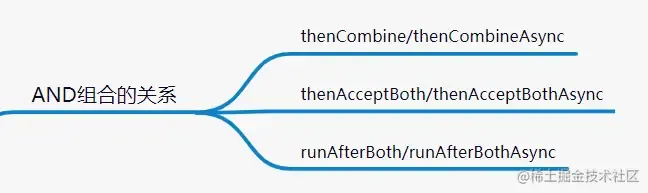
thenCombine / thenAcceptBoth / runAfterBoth都表示:将两个CompletableFuture组合起来,只有这两个都正常执行完了,才会执行某个任务。区别在于:
- thenCombine:会将两个任务的执行结果作为方法入参,传递到指定方法中,且有返回值
- thenAcceptBoth: 会将两个任务的执行结果作为方法入参,传递到指定方法中,且无返回值
- runAfterBoth 不会把执行结果当做方法入参,且没有返回值。
展开代码public static void main(String[] args) throws InterruptedException, ExecutionException, TimeoutException { CompletableFuture<String> first = CompletableFuture.completedFuture("第一个异步任务"); ExecutorService executor = Executors.newFixedThreadPool(10); CompletableFuture<String> future = CompletableFuture //第二个异步任务 .supplyAsync(() -> "第二个异步任务", executor) // (w, s) -> System.out.println(s) 是第三个任务 .thenCombineAsync(first, (s, w) -> { System.out.println(w); System.out.println(s); return "两个异步任务的组合"; }, executor); System.out.println(future.join()); executor.shutdown(); }
2、OR
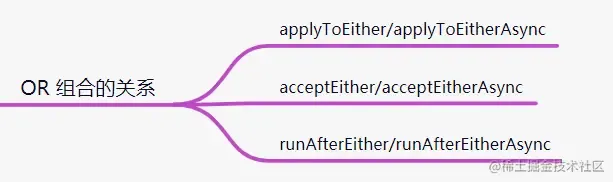
applyToEither / acceptEither / runAfterEither 都表示:将两个CompletableFuture组合起来,只要其中一个执行完了,就会执行某个任务。区别在于;
- applyToEither:会将已经执行完成的任务,作为方法入参,传递到指定方法中,且有返回值
- acceptEither: 会将已经执行完成的任务,作为方法入参,传递到指定方法中,且无返回值
- runAfterEither: 不会把执行结果当做方法入参,且没有返回值。
展开代码public static void main(String[] args) { //第一个异步任务,休眠2秒,保证它执行晚点 CompletableFuture<String> first = CompletableFuture.supplyAsync(()->{ try{ Thread.sleep(2000L); System.out.println("执行完第一个异步任务");} catch (Exception e){ return "第一个任务异常"; } return "第一个异步任务"; }); ExecutorService executor = Executors.newSingleThreadExecutor(); CompletableFuture<Void> future = CompletableFuture //第二个异步任务 .supplyAsync(() -> { System.out.println("执行完第二个任务"); return "第二个任务";} , executor) //第三个任务 .acceptEitherAsync(first, System.out::println, executor); executor.shutdown(); }
3、AllOf
所有任务都执行完成后,才执行 allOf返回的CompletableFuture。如果任意一个任务异常,allOf的CompletableFuture,执行get方法,会抛出异常
展开代码public static void main(String[] args) throws ExecutionException, InterruptedException { CompletableFuture<Void> a = CompletableFuture.runAsync(()->{ System.out.println("我执行完了"); }); CompletableFuture<Void> b = CompletableFuture.runAsync(() -> { System.out.println("我也执行完了"); }); CompletableFuture<Void> allOfFuture = CompletableFuture.allOf(a, b).whenComplete((m,k)->{ System.out.println("finish"); }); }
4、AnyOf
任意一个任务执行完,就执行anyOf返回的CompletableFuture。如果执行的任务异常,anyOf的CompletableFuture,执行get方法,会抛出异常
展开代码public static void main(String[] args) throws ExecutionException, InterruptedException { CompletableFuture<Void> a = CompletableFuture.runAsync(()->{ try { Thread.sleep(3000L); } catch (InterruptedException e) { e.printStackTrace(); } System.out.println("我执行完了"); }); CompletableFuture<Void> b = CompletableFuture.runAsync(() -> { System.out.println("我也执行完了"); }); CompletableFuture<Object> anyOfFuture = CompletableFuture.anyOf(a, b).whenComplete((m,k)->{ System.out.println("finish"); // return "捡田螺的小男孩"; }); anyOfFuture.join(); }
5、thenCompose
thenCompose方法会在某个任务执行完成后,将该任务的执行结果,作为方法入参,去执行指定的方法。该方法会返回一个新的CompletableFuture实例
展开代码public static void main(String[] args) throws ExecutionException, InterruptedException { CompletableFuture<String> f = CompletableFuture.completedFuture("第一个任务"); //第二个异步任务 ExecutorService executor = Executors.newSingleThreadExecutor(); CompletableFuture<String> future = CompletableFuture .supplyAsync(() -> "第二个任务", executor) .thenComposeAsync(data -> { System.out.println(data); return f; //使用第一个任务作为返回 }, executor); System.out.println(future.join()); executor.shutdown(); }
4、适用注意点
- Future需要获取返回值,才能获取异常信息。也就是调用get方法后才能抛出异常
- CompletableFuture的get()方法是阻塞的。
- CompletableFuture代码中又使用了默认的线程池,处理的线程个数是电脑CPU核数-1。在大量请求过来的时候,处理逻辑复杂的话,响应会很慢。一般建议使用自定义线程池,优化线程池配置参数。
- 自定义线程池时,注意饱和策略,但是如果线程池拒绝策略是DiscardPolicy或者DiscardOldestPolicy,当线程池饱和时,会直接丢弃任务,不会抛弃异常。因此建议,CompletableFuture线程池策略最好使用AbortPolicy,然后耗时的异步线程,做好线程池隔离哈。
使用示例:CompleteFuture实现异步转同步
展开代码1、定义好缓存,用于存储对象,实现另一侧能获取对象
// 请求缓存:<请求ID, 响应结果>
    private final ConcurrentMap<String, CompletableFuture<String>> pendingRequests = new ConcurrentHashMap<>();

2、发送消息时定义好id以及设置好超时时间
 public String sendServiceSync(String topic, MqttSendParam param) {
        JSONObject jsonObj = new JSONObject(param);
        String playLoad = jsonObj.toString();
        CompletableFuture<String> responseFuture = new CompletableFuture<>();
        try {
            pendingRequests.put(param.getBid(), responseFuture);
            log.info("【sendServiceSync】"+param.getMethod()+"||||||"+param.getBid());
            mqttProducer.sendMessage(topic, playLoad);
            return responseFuture.get(5, TimeUnit.SECONDS);
        } catch (Exception e) {
            throw new BizException("请求MQTT失败");
        }finally {
            pendingRequests.remove(param.getBid());
        }
    }

3、接收回调消息时完成即可
public void dealDrcReplyMsg(String deviceSn,String message) {
        JSONObject jsonObj = new JSONObject(message);
        String method = jsonObj.getStr("method");
        if(ObjectUtil.isNotNullObj(method)){
            String bid = method+"_"+deviceSn;
            CompletableFuture<String> responseFuture = pendingRequests.get(bid);
            if (ObjectUtil.isNotNullObj(responseFuture)) {
                responseFuture.complete(message);
            }else {
//                log.warn("未找到请求方法为{}ID为{}的请求",method, bid);
            }
        }
    }
可以看出相比CountDownLatch优雅很多。
简单对比
对比一下CountDownLatch、CyclicBarrier以及CompletableFuture。
| 对比维度 | CountDownLatch | CyclicBarrier | CompletableFuture |
|---|---|---|---|
| 核心功能 | 让1个或多个线程等待其他N个线程完成任务后再继续执行(“等待-通知”模型) | 让N个线程相互等待,直到所有线程都到达指定屏障点后,再一起继续执行(“同步屏障”) | 异步编程工具,支持非阻塞式任务执行、结果链式处理、多任务组合(串行/并行/聚合) |
| 核心设计思想 | 基于“计数器递减”,计数器为0时触发等待线程唤醒 | 基于“线程到达屏障”,所有线程到达后触发屏障放行(可重复使用) | 基于“未来结果”,任务异步执行,结果通过回调链处理,无需显式等待 |
| 可重用性 | 不可重用:计数器减到0后,无法重置,只能使用一次 | 可重用:所有线程通过屏障后,计数器自动重置,支持多次循环使用 | 不可重用:单个CompletableFuture对应单个异步任务的生命周期,完成后状态固定 |
| 触发条件 | 计数器(count)减至0(由其他线程调用countDown()触发) | 所有注册的线程都调用await()到达屏障点 | 异步任务执行完成(正常完成/异常终止) |
| 线程角色 | 分为“等待线程”(调用await())和“计数线程”(调用countDown()),角色固定 | 所有线程角色一致,均为“参与线程”(既等待其他线程,也被其他线程等待) | 无固定角色,任务执行线程与回调处理线程分离(默认ForkJoinPool,支持指定线程池) |
| 结果传递能力 | 无返回值:仅同步线程执行时机,不传递任务结果 | 无返回值:仅同步线程执行时机,不传递任务结果 | 支持结果传递:异步任务可返回结果,后续通过thenApply/thenAccept等链式处理 |
| 异常处理机制 | 若等待线程被中断,会抛出InterruptedException;计数线程异常不影响计数器(需手动处理) | 若任一线程在await()时异常/中断,会导致其他等待线程抛出BrokenBarrierException,屏障被破坏 | 任务异常会自动封装到Future中,支持exceptionally/whenComplete/handle等显式捕获处理 |
| 多任务组合能力 | 仅支持“等待N个任务完成”的简单同步,无复杂组合能力 | 仅支持“N个线程同步屏障”,无任务组合能力 | 强大的组合能力:串行(thenCompose)、并行聚合(allOf/anyOf)、结果合并(thenCombine) |
| 阻塞特性 | 等待线程会主动阻塞(调用await()),属于“阻塞式同步” | 参与线程会主动阻塞(调用await()),属于“阻塞式同步” | 默认非阻塞:通过回调链处理结果,无需阻塞等待;也可通过get()/join()强制阻塞获取结果 |
| 适用场景 | 1. 主线程等待多个子线程完成初始化后再启动;2. 多个子线程等待主线程下达指令后再执行;3. 批量任务完成后统一汇总(无结果传递) | 1. 多线程分阶段执行,需所有线程完成当前阶段后再进入下一阶段(如多线程数据加载后统一处理);2. 线程间需同步执行节奏的场景 | 1. 异步调用(如HTTP接口、数据库查询)+ 结果链式处理;2. 多异步任务并行执行并聚合结果;3. 非阻塞式业务流程(如异步通知、异步计算);4. 替代传统Future,支持更灵活的回调 |
| 核心方法 | countDown()(计数器减1)、await()(阻塞等待计数器为0)、await(long timeout, TimeUnit unit)(超时等待) | await()(阻塞等待所有线程到达屏障)、await(long timeout, TimeUnit unit)(超时等待)、reset()(重置屏障,支持重用) | 任务创建:supplyAsync()(有返回值)、runAsync()(无返回值);结果处理:thenApply()/thenAccept()/thenRun();异常处理:exceptionally()/handle();组合方法:allOf()/anyOf()/thenCombine() |
关键区别提炼:
- 同步vs异步:CountDownLatch/CyclicBarrier是阻塞式同步工具,核心解决“线程执行时机同步”;CompletableFuture是非阻塞式异步工具,核心解决“异步任务执行+结果处理”;
- 重用性:仅CyclicBarrier支持重复使用,其余两者均为一次性;
- 结果传递:仅CompletableFuture支持任务结果传递与链式处理,其余两者无此能力。
参考:
https://juejin.cn/post/7436399136763707418
本文作者:刘涛
本文链接:
版权声明:本博客所有文章除特别声明外,均采用 BY-NC-SA 许可协议。转载请注明出处!